Backed by biology.
How gradual audio rise and nature sounds align with your body's natural awakening process to reduce stress and improve mood.
The Cortisol Problem
Standard alarms act as an acute stressor. When a loud noise wakes you suddenly, your sympathetic nervous system activates the "fight or flight" response. This causes an immediate spike in heart rate and blood pressure, along with a surge of cortisol and adrenaline.
Starting your day in this state of panic can lead to lingering anxiety, brain fog, and fatigue that lasts for hours.

Stress Response
Beating Sleep Inertia
Sleep inertia is that groggy, disoriented feeling when you first wake up. It is most severe when you are awoken abruptly from deep (slow-wave) sleep.
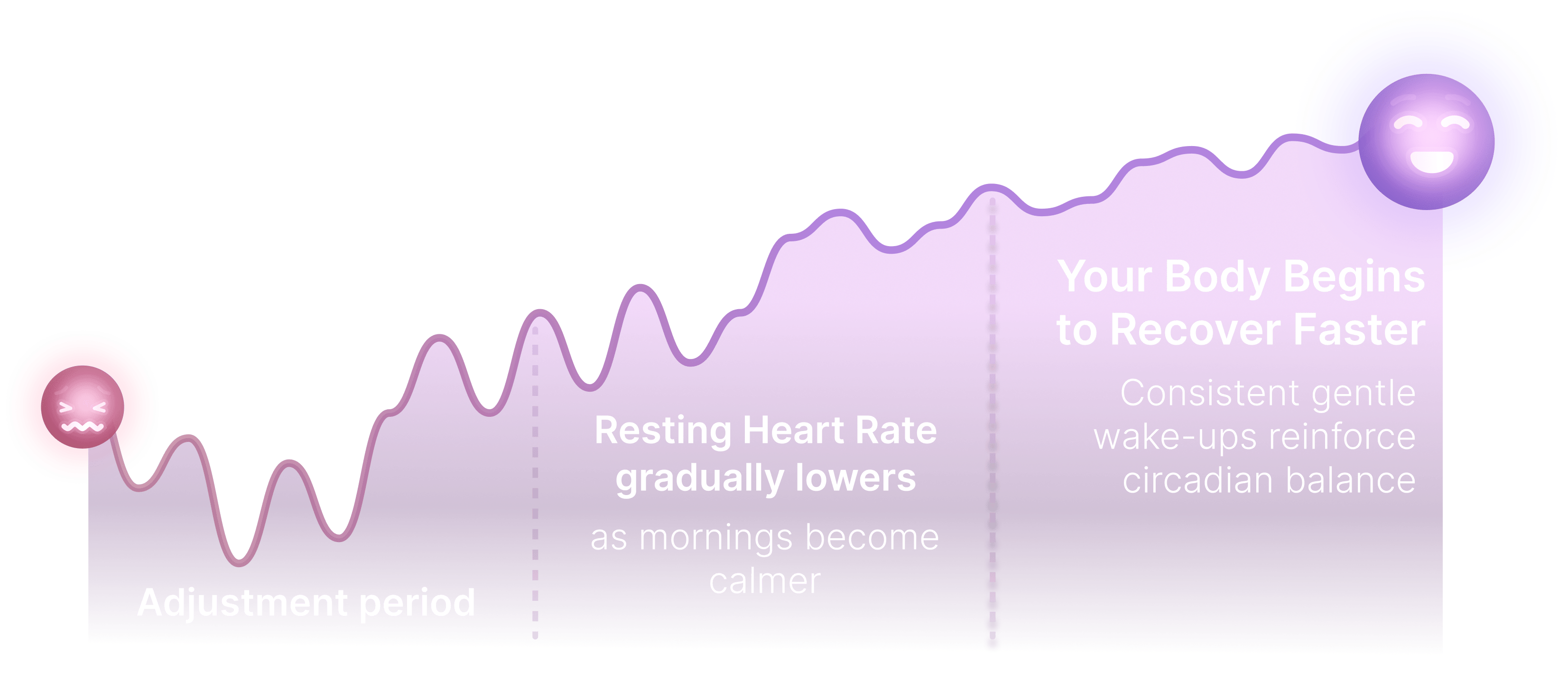
Wonderwake's gradual fade-in over 15-60 minutes gently transitions your brain from deep sleep to light sleep before fully waking you. This mimics the natural sunrise effect, reducing sleep inertia and helping you feel alert faster.
Wake Up Alert
Why Nature Sounds?
Humans are wired to find safety in nature sounds. Birdsong, for example, is a signal of safety—birds sing when there are no predators around. Waking up to these sounds signals to your primitive brain that it is safe to wake up, promoting a positive mood state known as "soft fascination" that restores attention and reduces mental fatigue.